

Colored-vacuum-casting-prototype
Vacuum Casting Service
Vacuum Casting Service
Production Grade Quality
Lead time: 6 to 10 Days / Quantity: 5 to 100 units
Production Grade Quality
Lead time: 6 to 10 Days
Quantity: 5 to 100 units
Vacuum Casting Service
Vacuum Casting Service
Qualigie provides a complete turnkey solution through master patterns to cast copies and surface finishing. With years of expertise in the field, we can fabricate your plastic parts to the highest standards at low cost and with fast turnaround.
What Is Vacuum Casting?
What Is Vacuum Casting?
Vacuum casting, also known as urethane casting or silicone molding is a rapid prototyping technology that uses silicone molds to quickly create dozens of urethane casting parts. It is ideal for functional testing, concept proofs, trade shows and market testing.

Why Choose Qualigie for CNC Machining Services?
Why Choose Qualigie for CNC Machining Services?

Low cost for molds
Silicone molds are less expensive than the tooling used for injection molding, it is a cost effective method for making high quality prototypes and low volumes of parts.

Fast turnaround
We can make the silicone molds in a few days, and provide up to 30 functional casting parts in 10 days, depending on part specs and material.

A wide selection of materials
Many types of resins are available for vacuum casting, such as ABS, PA, PP, transparent PC, PMMA, rubber, etc. We are able to produce flexible and end-use parts with production-level quality.

Excellent surface finish
Vacuum casting provides high-quality part surface finish close to that of injection molding. Color pigments can be added to the resin for a variety of color options.

Fine details
Vacuum casting is a great way to make parts with complex part structure, fine pattern, deep grooves and so on. It replicate intricate details from one piece to the next.

Overmolding
When you design one part with multiple materials, texture and hardness, our overmolding service will meet your demands. It combines two or more different resins to a single finished part.
Vacuum Casting Tolerances
Vacuum Casting Tolerances
Qualigie offers vacuum casting tolerances ranging from ±0.20 mm to ±0.4 mm, with the highest precision able to reach ±0.05 mm.
The tolerances are regulated by ISO 2768-1. Below are vacuum casting technical specifications.
Item
Information
Standard accuracy
±0.20mm per 100mm
Maximum part dimensions
2000*1200*1000mm
Minimum wall thickness
0.8mm. The optimum is 1.5 mm-2.5 mm
Typical quantities
20-30 copies per mold
Typical lead time
Up to 30 copies in 10 days
Color & Finishing
Custom colored, textured, painted and clear polished
Vacuum Casting Materials
Qualigie offers a wide range of vacuum casting materials to meet your demands. These material can be similar to engineering plastics, such as ABS, PA, PP, PC, PMMA and so on.
By selecting different casting materials, we can produce parts with different hardness, high transparent, high temperature resistant, glass fibers filled, etc.
Vacuum Casting Finishes
The urethane casting part part can be a complete aesthetic model with various colors, textures and finishes. By adding with color pigments to the resin, we can get a variety of color options.
Highly glossy surface finish can be created by polishing the master pattern before mold making. Semi gloss or matte finish can be made through sandblasting of the master pattern. We also offer a full line of finishing services including painting, sanding, pad printing and more.
Gallery Of Vacuum Casting Parts
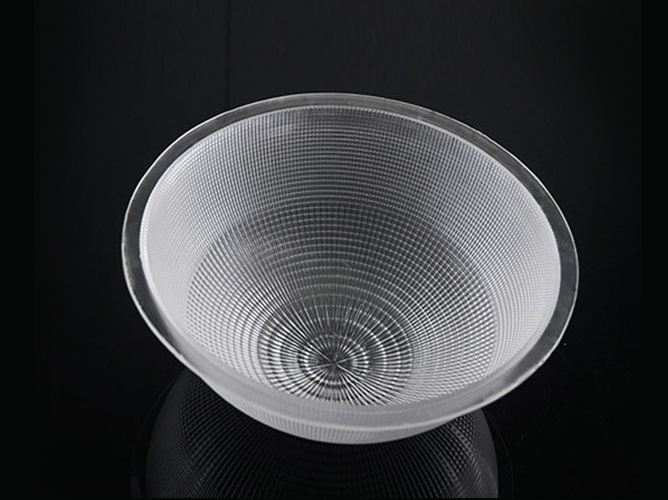
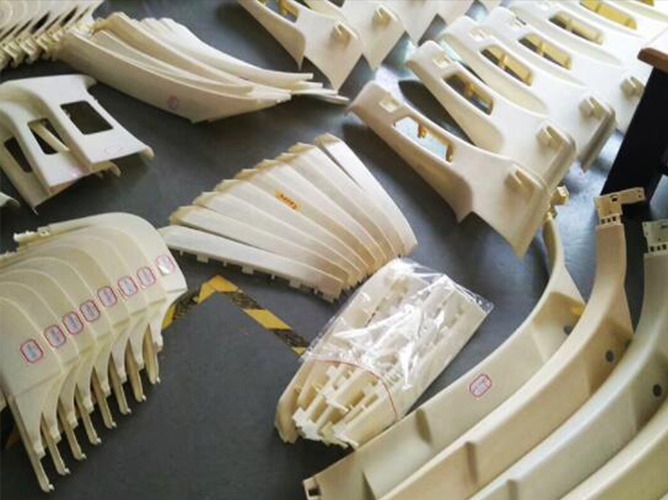
Our advanced vacuum casting services help you to create high quality prototypes and low volumes of parts. We made different vacuum casting components in various industries such as aerospace, automotive, medical devices, electronics, and so on.




Vacuum Casting Process
The vacuum casting process has three steps: making the master pattern, make molds and casting the parts.

According to the 3D drawing, a master pattern will be made by 3D printing or CNC machining. It is a significant step that require high precision. We will inspect the master carefully before move to silicone mold making.
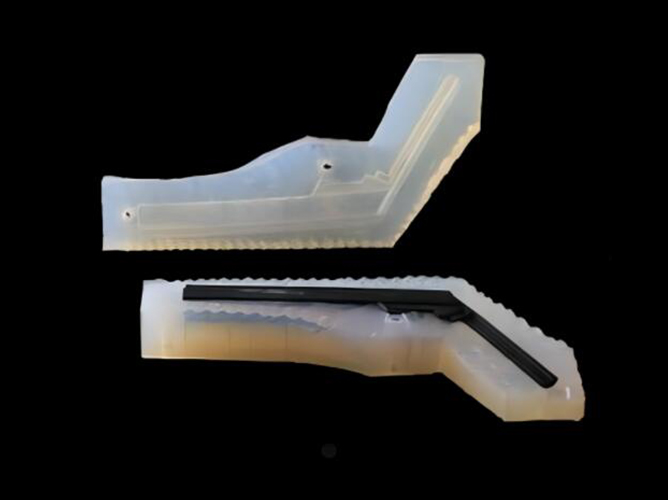
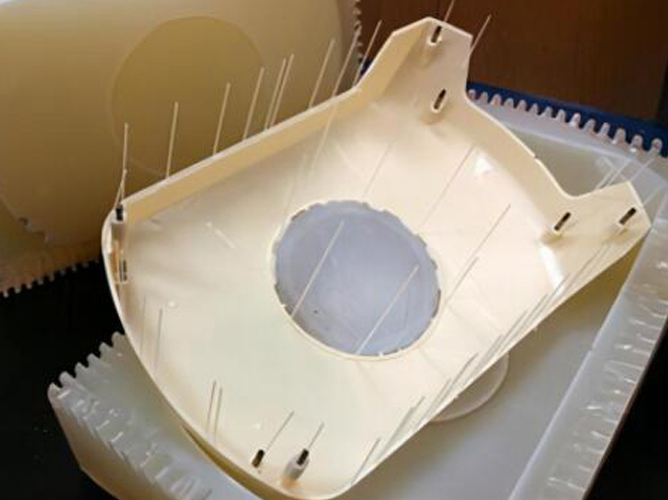
After the master model is prepared, it’s placed into a casting box with plastic rods to set gates and vents. Pour the liquid silicone around the master and vacuum it, then cure it in an oven for 8-16 hours. Once the silicone is cured, carefully cut open the mold and remove the master. This leaves behind an empty cavity in the exact mirror image of the original.
The casting resin is poured into the mold cavity and then the mold is put into a vacuum chamber. Vacuum pressure is used to remove any air bubbles while force resin into the entire volume of space. Then the mold is heated in an oven where the resin is cured for 1-3 hours. After the part is fully cured, it is removed from the silicone mold to obtain a accurate replication of the original. Repeat this cycle to get more copies. Each silicone mold is typically good for 20-30 pieces. Further finishing can be made if required.
Vacuum Casting FAQs
1
What is the shrinkage of the vacuum casting parts?
It depends on the vacuum casting material and part geometry. A shrinkage rate of 0.15% can be expected due to thermal expansion of the liquid, and the response of the flexible mould.
Is undercut a problem in vacuum casting?
Normally, undercuts and drafts are not a problem when the design is for vacuum casting itself. However, if you're building a prototype that is intended to move to another production method like injection molding, you should create your design as intended for larger production runs.
When should I choose vacuum casting instead of injection molding?
When you have short-run production needs on plastic parts for functional testing and market promotion, vacuum casting will be a perfect way. It is a cost-effective process to finish high-quality parts in short lead time.


+86-592-5992917 / +86-13860176904

info@qualigie.com

Skype:Nicole Luo

#2003, No.9 Yilan Road, Siming, Xiamen, Fujian, 361008, China
BLK 131 Jalan Bukit merah, 160131, Singapore
+86-592-5992917 / +86-13860176904
info@qualigie.com
Skype:
#2003, No.9 Yilan Road, Siming, Xiamen, Fujian, 361008, China
BLK 131 Jalan Bukit merah, 160131, Singapore
CAPABILITIES
REQUEST A QUOTE
REQUEST A QUOTE
Copyright © Xiamen Qualigie Rapid Technologies Co., Ltd.
Copyright © Xiamen Qualigie Rapid Technologies Co., Ltd.
