

Surface Finishing Service
Surface Finishing Service
Production level surface finishing for both metal and plastic parts.
Various kind of options available
Production level surface finishing for both metal and plastic parts.
Various kind of options available.
What Can Qualigie's Finishing Service Do for You?
What Can Qualigie’s Finishing Service Do for You?
Surface finishing is the process of achieving the desired appearance of a manufactured part by altering its surface like texture, color, and chemical makeup. This enhances the part's overall durability and appearance.
Qualigie offers an integrated surface finishing service for your prototypes or low-volume production to meet your needs. With skilled experts in surface finishing, we will get your plastic and metal parts made with high quality and aesthetic surface finish.

As machined finish
As machined finish
As machined or as-milled finish means a machined part has small but visible tool marks that follow the path of the machining tool. The standard surface roughness is Ra 3.2μm. Parts have sharp edges and burrs which can be removed upon request. The smooth machining surface roughness is Ra 1.6μm, which means parts have less visible tool marks.

Blasting
Blasting
Blasting is the process of treating a machined or casted part surface by propelling a stream of blast media under high pressure. The abrasive media can be silica sand, glass bead, steel shot, etc. After blasting, the surface roughness was improved. It is a fast and easy way to reduce tool marks and make a uniform grainy texture.

Polishing
Polishing
Polishing is the process of creating a smooth and shiny surface by using sand paper to rub it or by applying a chemical treatment. It is used to enhance parts appearance and prepare them for later surface finishes like anodizing and plating. The roughness ranges from Ra 0.8μm to Ra 0.1μm. Mirror or clear finish can be achieved via polishing process.
Painting
Painting
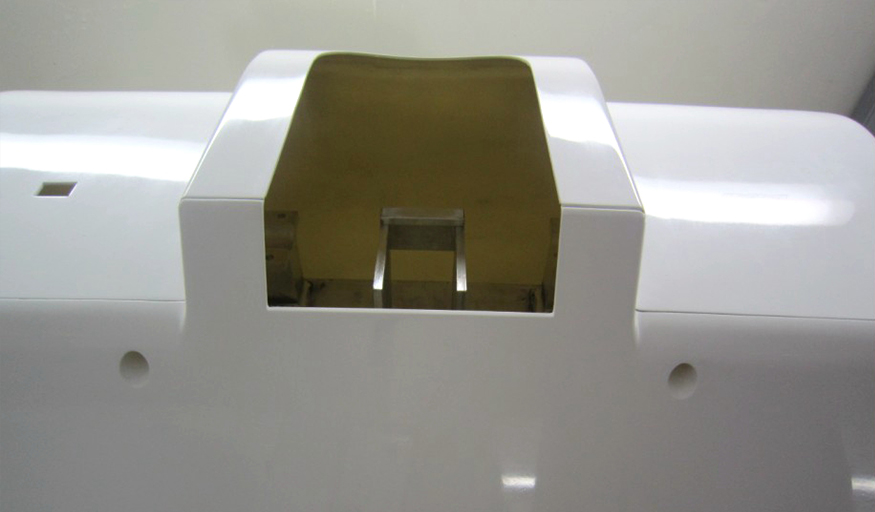
Painting involves spraying layers of paint onto the surface of the part. We can supply different paint finishing, in matte, satin, semi-gloss, glossy, soft touch (rubber paint), UV coating and metallic. Colors can be matched to a PANTONE or RAL color number, or a sample from customer. It is a very flexible way to create a different surface appearance.

Anodizing
Anodizing
Anodizing is an electrochemical process used to form a layer of aluminum oxide on the surface of aluminum parts. Anodizing can give the part surface color as you want, making it harder and more durable. Type II anodizing is the most common type of anodizing process. Type III / hard anodize is much thicker and abrasion resistant coating compared to type II.

Electroplating
Electroplating
Electroplating is a process where a thin layer of metal coating is applied on the surface of a part by making use of an electric current. It is ideal to improve the resistance to corrosion and function of electrical conductivity. There are specific types of electroplating such as chrome plating, nickle plating, zinc plating, and tin plating.

Powder Coating
Powder Coating
This is a finish of applying powdered paint to metal components, providing a thick layer of protection which can be more durable than standard paint finishes. It is resistant to wear and tear, extreme temperatures, sunlight and corrosion, allowing for a wide range of applications such as automotive, electronics and outdoor equipment.
Black Oxide
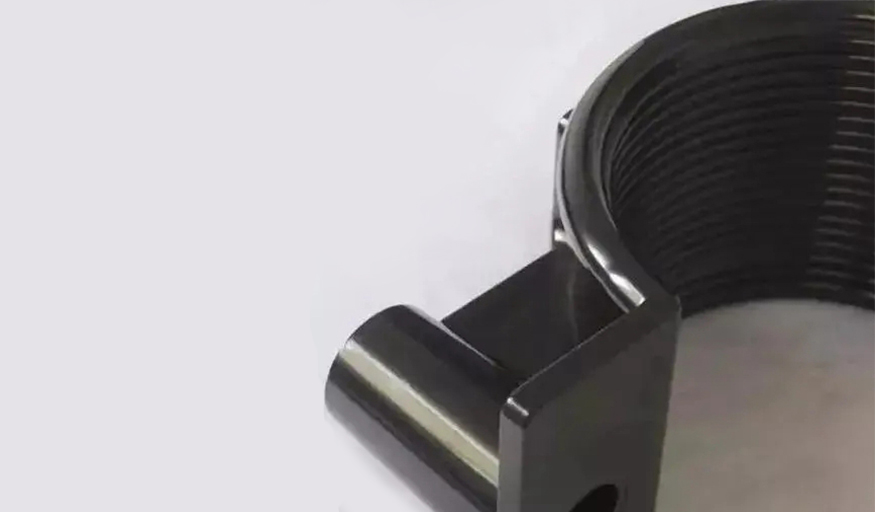
Black oxide, also known as blackening is a chemical conversion coating to produce a magnetite (Fe3O4) on the surface of ferrous metals, like carbon steel, stainless steel, copper and zinc, and thus protect the surface of metal from corrosion and minimize light reflection. It is widely used in applications such as gears, hydraulic blocks and tools and so on.

Brushing
Brushing
Brushing finish involves using a wire brush or sandpaper to create a series of fine lines or scratches on the surface of metals, like steel, stainless steel, aluminum and brass.
Brushing is usually for aesthetic purposes, as it can be circular, diagonal or longitudinal to give your parts the desired effect.

Printing
We can create a logo, symbol or text on your prototypes or production parts by printing. Silk screen printing is the process of pressing ink through open areas of a mesh screen that is not covered with the stencil so that a pattern is printed onto a substrate. Any flat surface can be printed, in any color. Pad printing is the option for printing on unusual shapes.


+86-592-5992917 / +86-13860176904

info@qualigie.com

Skype:Nicole Luo

#2003, No.9 Yilan Road, Siming, Xiamen, Fujian, 361008, China
BLK 131 Jalan Bukit merah, 160131, Singapore
+86-592-5992917 / +86-13860176904
info@qualigie.com
Skype:
#2003, No.9 Yilan Road, Siming, Xiamen, Fujian, 361008, China
BLK 131 Jalan Bukit merah, 160131, Singapore
CAPABILITIES
REQUEST A QUOTE
REQUEST A QUOTE
Copyright © Xiamen Qualigie Rapid Technologies Co., Ltd.
Copyright © Xiamen Qualigie Rapid Technologies Co., Ltd.
